


The Dual-Agonist Concept
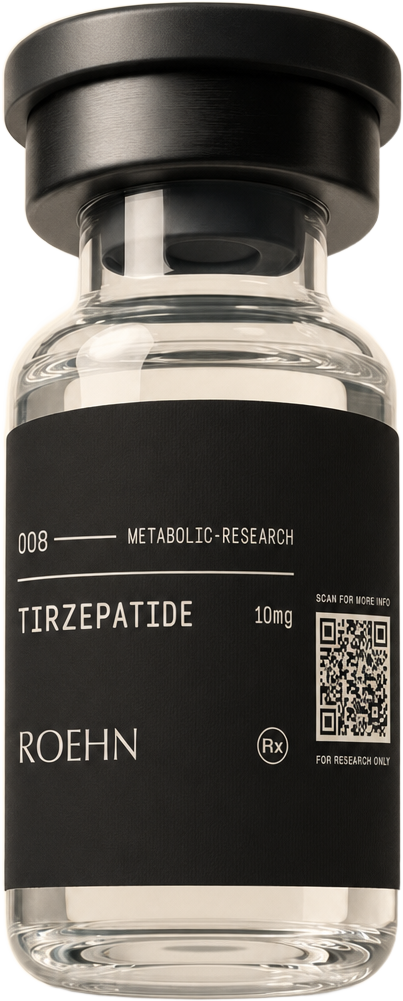
Tirzepatide represents a paradigm shift in incretin-based research by simultaneously activating two complementary receptors: the glucose-dependent insulinotropic polypeptide (GIP) receptor and the glucagon-like peptide-1 (GLP-1) receptor. This dual-agonist approach has been investigated in preclinical models for potential synergistic metabolic effects that may exceed those achieved through single-receptor activation.
Structural Features
Tirzepatide is a 39-amino-acid synthetic peptide based on the native GIP sequence, with amino acid substitutions that confer GLP-1R agonist activity. Key structural modifications include a C20 fatty diacid moiety attached via a linker that promotes albumin binding and extends the circulating half-life, enabling once-weekly research protocols.
GIP Receptor Research
While GLP-1R biology has been extensively studied, the GIP receptor (GIPR) has received renewed research attention following the development of dual agonists. In preclinical models, GIPR activation has been investigated for effects on adipocyte biology, lipid metabolism, bone metabolism, and central appetite regulation. The GIPR is expressed in adipose tissue, bone, brain, and pancreatic islets, providing multiple potential pathways for metabolic modulation.
Synergy in Preclinical Models
Animal studies have explored whether dual GIP/GLP-1 agonism produces metabolic effects that are additive or synergistic compared to selective agonism of either receptor alone. Areas of investigation include food intake reduction, energy expenditure, body composition changes, glucose tolerance, and insulin sensitivity in various rodent and primate models.
Compare tirzepatide research with selective GLP-1 agonist studies using semaglutide, available from ROEHN with comprehensive analytical documentation.
Research Disclaimer
This article is for educational and informational purposes only. All compounds discussed are intended strictly for in-vitro and preclinical research use. They are not intended for human consumption. Always consult published scientific literature and institutional review protocols before initiating any research program.