Shipped fast, 10/10
Every order is shipped and home within a couple days without fail! Great customer service and let's just say that the research has been very successful thus far! 10/10 all around.
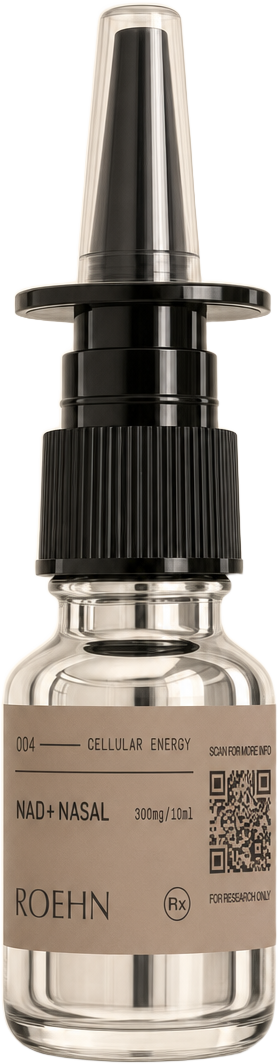
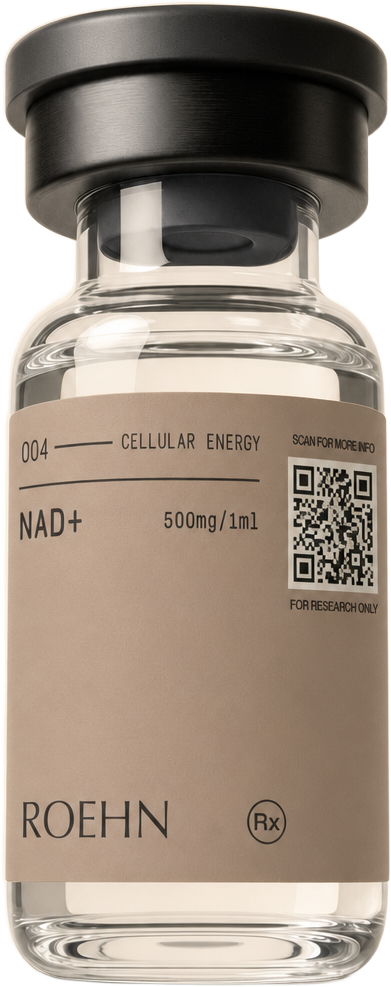
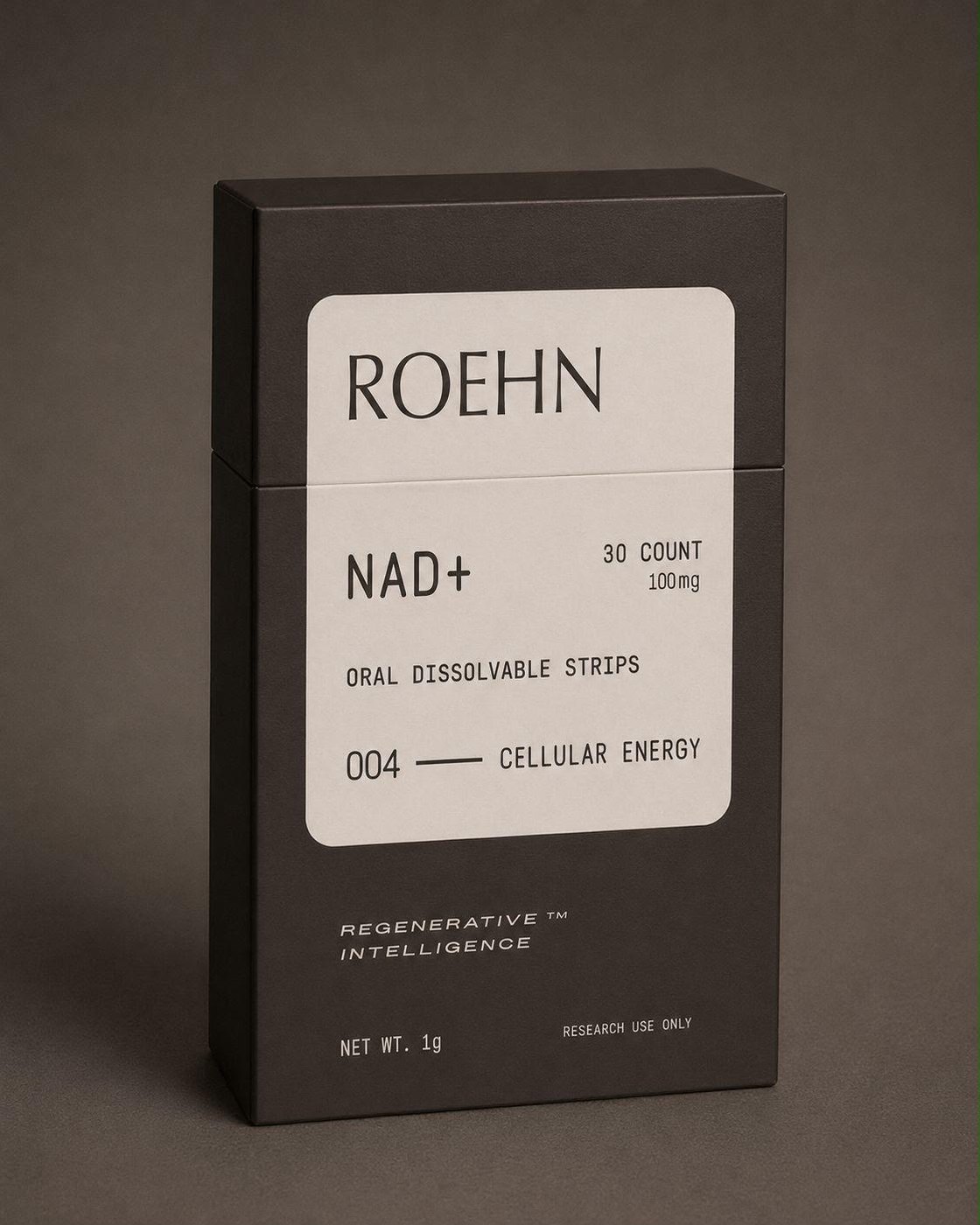
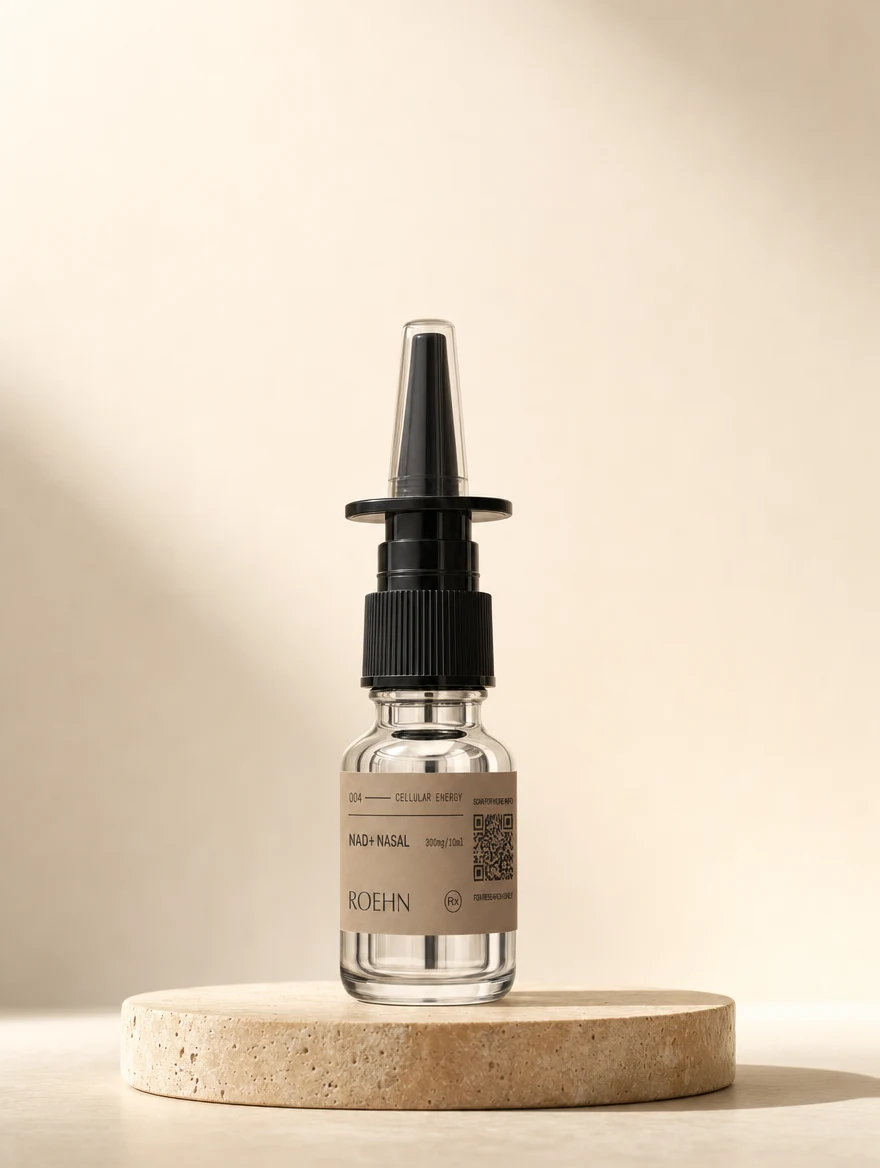
NAD+ (nicotinamide adenine dinucleotide) is a pyridine dinucleotide coenzyme — two nucleotide units, one carrying a nicotinamide moiety and the other an adenine moiety, joined through a bridge of two phosphate groups. In published preclinical and biochemical literature it has been investigated as a redox cofactor in cellular energy metabolism and as a substrate in sirtuin- and PARP-mediated enzymatic research. Supplied as a nasal research presentation; purity and identity are reported per lot on that lot’s Certificate of Analysis. For laboratory and research use only — not for human or animal consumption. ROEHN makes no claims regarding its effects.
Ships every 30 days at $140.00 plus shipping, charged to the card you pay with today. Cancel any time by emailing us — no minimum term. Research use only.
Reconstitution, storage & aseptic handling guidance for NAD+ Nasal — reagent preparation notes for the lab bench.
Sign in to viewThis SKU’s current lot has no published certificate yet. No purity, net-content or endotoxin result is shown here until a signed certificate is issued.
Browse published certificates →Enter the lot code from your roehn vial to pull its Certificate of Analysis: independent purity and identity results, published exactly as the lab reported them. Lots still in testing say so. Research use only.
Browse certificates →Ratings are 1–5. Reviews appear as written, after moderation for spam and off-topic content. They describe ordering, packaging and service — not any physiological outcome.
Every order is shipped and home within a couple days without fail! Great customer service and let's just say that the research has been very successful thus far! 10/10 all around.