Introduction to Sublingual Delivery
Sublingual drug delivery — the administration of compounds beneath the tongue — exploits the thin, highly vascularized mucosa of the sublingual region to achieve rapid compound absorption into systemic circulation. This route bypasses first-pass hepatic metabolism and gastrointestinal degradation, two major barriers that limit the bioavailability of orally administered peptides and other biomolecules.
Oral dissolvable strips (ODS) represent a sophisticated delivery platform that combines sublingual absorption advantages with precise dose uniformity, ease of use, and improved patient compliance compared to traditional dosage forms. The technology has gained significant attention in research settings for its potential to deliver compounds that are otherwise poorly suited to oral administration.
Anatomy of Sublingual Absorption
The Oral Mucosa
The sublingual mucosa is a non-keratinized stratified squamous epithelium approximately 100-200 micrometers thick — significantly thinner than the buccal mucosa (500-800 μm) or skin epidermis (>1000 μm). This thinness, combined with a rich underlying vascular plexus (the sublingual artery and vein), creates ideal conditions for transmucosal absorption.
Absorption Pathways
Compounds cross the sublingual mucosa through two primary pathways:
- Transcellular (intracellular): Lipophilic molecules pass directly through epithelial cells, traversing cell membranes via passive diffusion
- Paracellular (intercellular): Hydrophilic and small molecules pass through the spaces between cells, moving through the intercellular lipid matrix
The relative contribution of each pathway depends on the physicochemical properties of the compound, including molecular weight, lipophilicity (log P), charge state, and hydrogen bonding capacity.
Advantages Over GI Absorption
Sublingual delivery offers several key advantages over conventional gastrointestinal absorption:
- First-pass bypass: Compounds absorbed sublingually enter the systemic circulation directly via the sublingual vein → jugular vein → vena cava, avoiding hepatic first-pass metabolism that degrades many compounds
- Enzymatic protection: The sublingual mucosa has lower enzymatic activity compared to the GI tract, reducing peptide degradation
- pH stability: Avoidance of the acidic gastric environment (pH 1-3) that denatures many peptides
- Rapid onset: The rich vascular supply enables faster absorption compared to oral administration
Oral Dissolvable Strip Technology
Strip Composition
ODS are thin, flexible polymer films typically 50-150 μm thick that dissolve rapidly when placed on the sublingual mucosa. Key components include:
- Film-forming polymer: Hydrophilic polymers such as pullulan, hydroxypropyl methylcellulose (HPMC), polyvinyl alcohol (PVA), or maltodextrin form the structural matrix
- Active compound: The research compound is uniformly dispersed or dissolved within the polymer matrix
- Plasticizers: Glycerin, propylene glycol, or polyethylene glycol improve film flexibility and prevent brittleness
- Taste-masking agents: Sweeteners and flavoring agents may be incorporated for palatability
- Permeation enhancers: Surfactants, bile salts, or chelating agents may be included to improve mucosal absorption
- Stabilizers: Antioxidants and pH buffers protect labile compounds during storage
Manufacturing Methods
ODS are manufactured through several techniques:
- Solvent casting: The polymer solution containing the active compound is cast onto a release liner and dried to form a film. This is the most widely used method for research-scale production.
- Hot-melt extrusion: Polymer and active compound are mixed and extruded through a die at elevated temperature. Suitable for thermostable compounds.
- Electrospinning: An emerging technique that produces nanofiber films with very high surface area and rapid dissolution rates.
Critical Quality Attributes
Strip quality is assessed by multiple parameters:
- Content uniformity: Active compound must be distributed evenly across the strip area
- Disintegration time: Time to complete dissolution, typically targeting <60 seconds for sublingual strips
- Mechanical properties: Tensile strength, elongation, and folding endurance must be adequate for handling
- Moisture content: Must be controlled to prevent degradation during storage
- Dissolution profile: Rate and extent of active compound release from the polymer matrix
Peptide Delivery via Oral Strips
Challenges
Peptide delivery via ODS presents specific challenges that have been addressed through formulation innovation:
- Molecular size: Most peptides are larger than traditional small-molecule drugs, potentially limiting mucosal permeation
- Hydrophilicity: Many peptides are highly hydrophilic, favoring the paracellular absorption route which has lower capacity
- Stability: Peptides must maintain structural integrity during strip manufacturing and storage
- Dose loading: The thin strip format limits the total amount of compound that can be incorporated
Solutions and Innovations
Formulation strategies to enhance peptide delivery via ODS include:
- Permeation enhancers: Compounds such as sodium glycocholate, EDTA, and chitosan derivatives that transiently increase mucosal permeability
- Mucoadhesive polymers: Materials that adhere to the mucosal surface, prolonging contact time and improving absorption
- Nanoparticulate systems: Encapsulation of peptides in nanoparticles or nanocomplexes within the strip matrix
- Enzyme inhibitors: Incorporation of protease inhibitors to prevent peptide degradation at the mucosal surface
Bioavailability Considerations
Sublingual bioavailability for peptide compounds delivered via ODS varies widely depending on the specific compound, formulation, and permeation enhancement strategy. While small lipophilic molecules can achieve sublingual bioavailability exceeding 50%, peptides typically show lower absolute bioavailability (5-25%) through this route — still significantly higher than conventional oral administration, which may yield less than 1% for many peptides.
Comparative bioavailability studies are an active area of research, with investigators examining how sublingual strip delivery compares to subcutaneous injection, intranasal, and traditional oral formulations for various peptide compounds.
ROEHN and Oral Strip Innovation
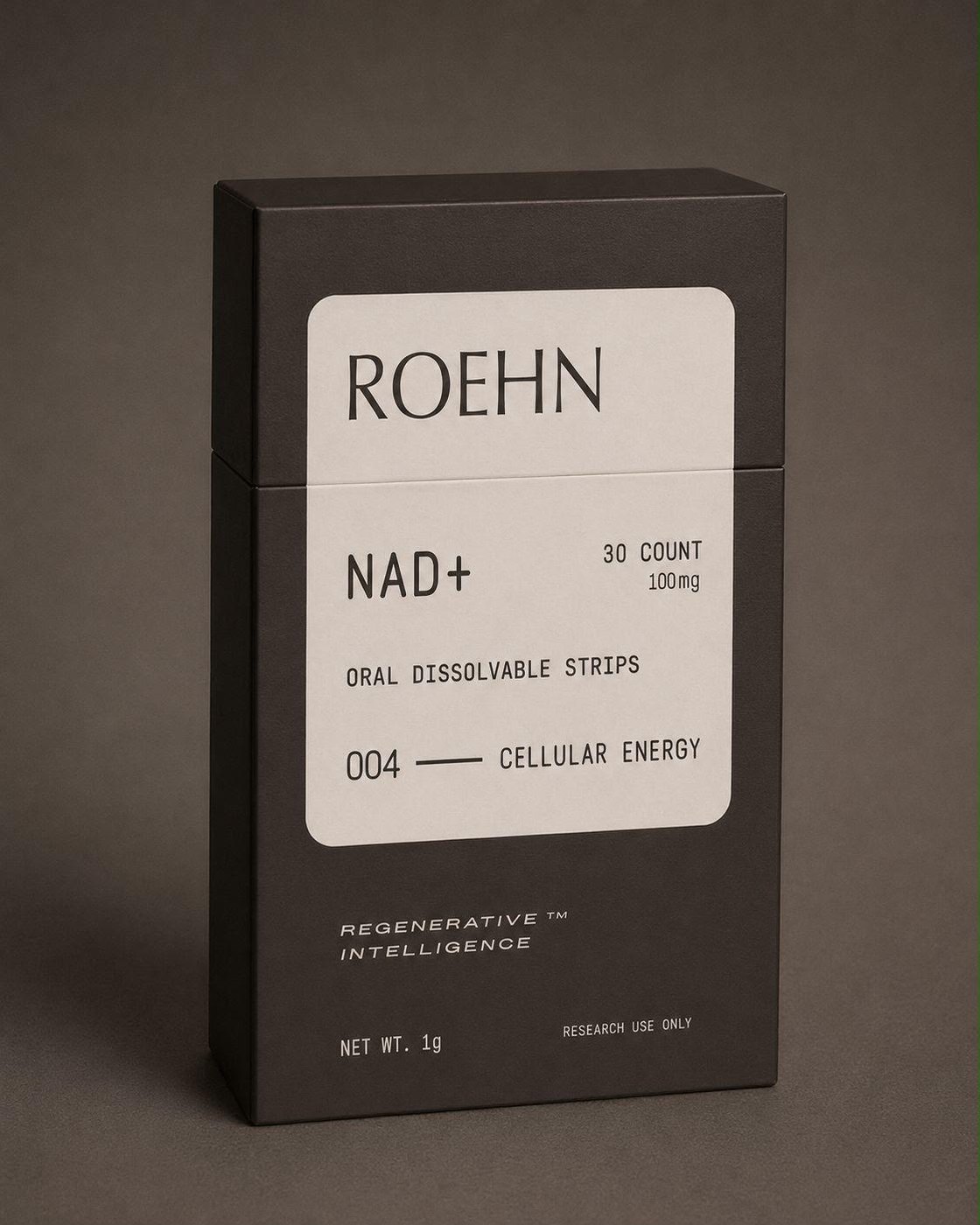
ROEHN has invested in oral dissolvable strip technology as part of our commitment to advancing peptide research delivery platforms. Our Pocket Strips line represents this innovation, manufactured under stringent quality standards to ensure content uniformity, stability, and optimal dissolution characteristics. This technology offers researchers a convenient, precisely-dosed format for peptide administration in research settings.
Explore our research compound catalog, including both traditional lyophilized formulations (BPC-157, TB-500, Semaglutide) and innovative delivery platforms.
Research Disclaimer
This article is for educational and informational purposes only. All compounds discussed are intended strictly for in-vitro and preclinical research use. They are not intended for human consumption. Always consult published scientific literature and institutional review protocols before initiating any research program.